Use case
Customer, tenant, public, employee, and fleet charging each create different requirements.
Commercial planning preview
Commercial charging begins with an operating model, not a charger count. Define who will use the site, how long vehicles dwell, who pays, who maintains the equipment, and what electrical and civil work the property can support.
Planning guidance first. Provider referral only with separate permission.
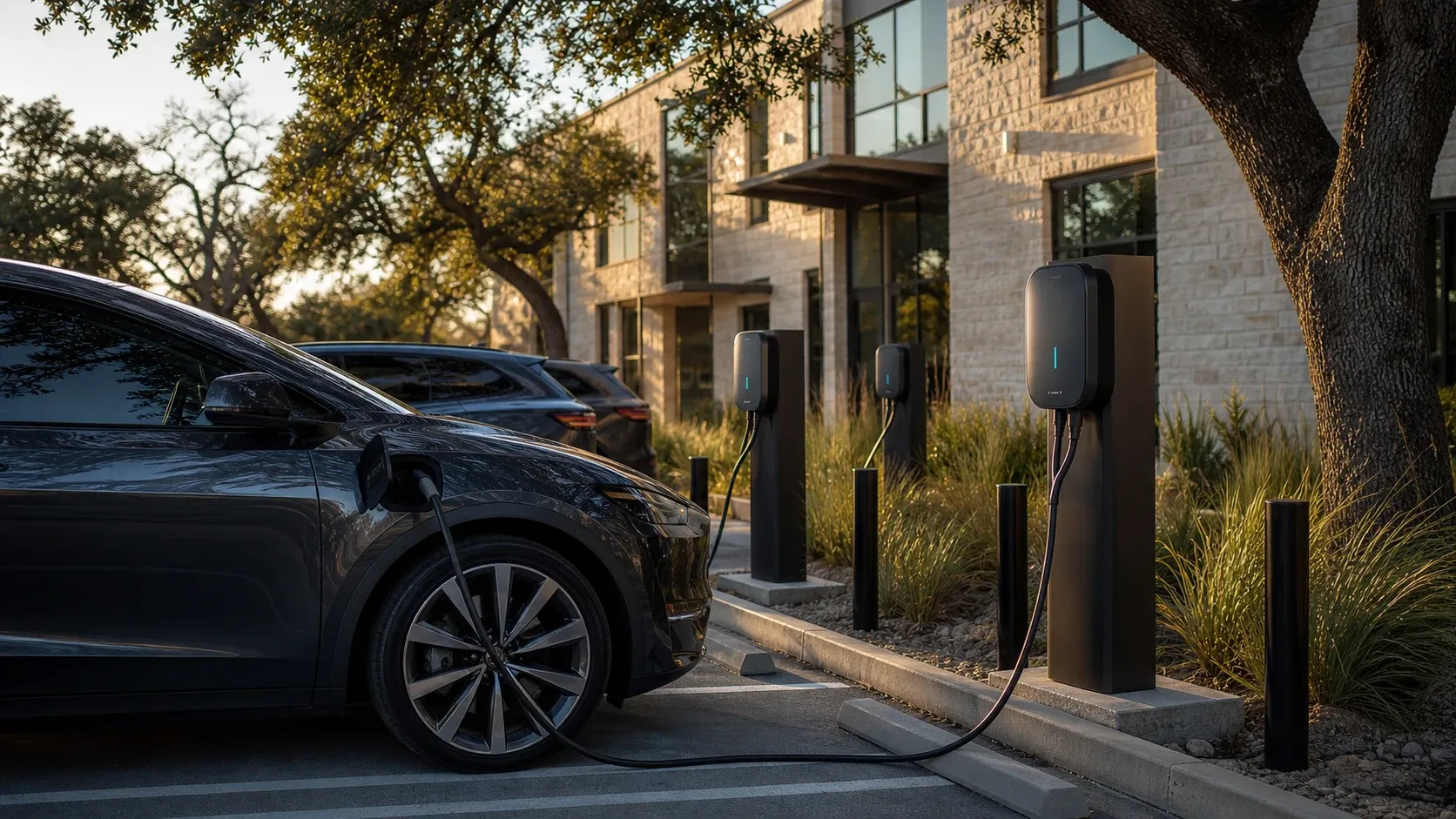
Customer, tenant, public, employee, and fleet charging each create different requirements.
Parking, electrical distribution, trenching, connectivity, and future phases should be considered together.
Access, pricing, uptime, support, and ownership need decisions before equipment selection.
Estimate the number of vehicles, arrival pattern, typical stay, turnover, and growth. Avoid selecting ports or power levels until the use case is clear.
Collect site plans if available, parking counts, accessible routes, electrical one-lines, transformer and distribution information, panel locations, and proposed trench or conduit paths.
Decide whether access control, payments, driver support, reporting, roaming, cellular service, Wi-Fi, or back-office integrations matter. Ask who owns data and what happens if a network service changes.
A phased design can reserve electrical and civil pathways for later growth. Ask providers to distinguish initial ports, future-ready capacity, and assumptions that would trigger additional utility work.
Common questions
Coverage is still being verified. This page prepares project context and does not promise a provider introduction.
Usually the use case, site constraints, electrical concept, network needs, and ownership model should inform the equipment shortlist.
The qualified project team and applicable authorities determine requirements for the specific site. This planning page is not a design or compliance approval.
Ready to prepare the request?